What is cyclooxygenase (COX-2)?
Cyclooxygenases, or COX for short, are enzymes that turn fatty acids into prostaglandins. These messengers mediate pain, fever and inflammation, among other things. There are two main forms: COX-1 (protective functions) and COX-2 (mainly active during inflammation).
Cyclooxygenase explained simply
COX enzymes convert the fatty acid arachidonic acid into prostaglandins, short-lived tissue hormones with many roles. Two forms are particularly important:
- COX-1 works continuously in the background. It protects the stomach lining, for example, and contributes to blood clotting.
- COX-2 is mainly ramped up during injury and inflammation. There it drives production of the prostaglandins that amplify pain and swelling.
Why do COX enzymes matter?
Classic painkillers from the NSAID group such as ibuprofen, diclofenac or acetylsalicylic acid inhibit COX enzymes, lowering prostaglandin production. Because COX-1 is inhibited too, typical side effects such as stomach irritation can occur. “Coxibs” were developed to inhibit COX-2 more selectively.
COX inhibition by plant compounds
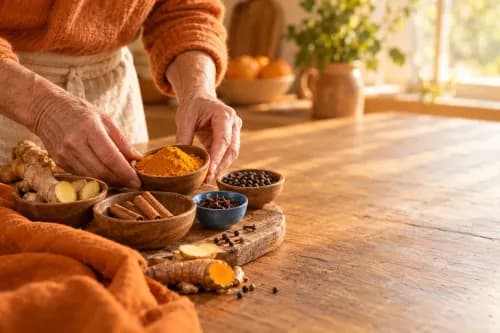
Some plant compounds also influence COX enzymes, mainly in laboratory experiments. For the pungent compounds of ginger, the gingerols and shogaols, inhibition of COX enzymes has been described; this is one reason ginger is studied in osteoarthritis research. For curcumin, an influence on COX-2 is discussed alongside other pathways such as the NF-κB pathway.
Important context: results from cell experiments or animal models cannot simply be transferred to humans. Enzyme inhibition in a test tube is no proof of an effect on osteoarthritis symptoms. What counts are clinical studies in people, and their results vary by product and study.
If you take NSAIDs or other medication, do not add or drop plant extracts with similar targets on your own; discuss it with your doctor. This text is not medical advice.
How do COX enzymes work in the joint?
In an inflamed joint, COX-2 increases production of prostaglandin E2. This messenger makes pain fibres more sensitive and promotes blood flow and swelling. That explains why COX inhibitors are used for joint pain. It also shows why studies on plant compounds often use prostaglandins or COX activity as an outcome.
Incidentally, omega-3 fatty acids and other dietary components change which starting substances are available for prostaglandin formation. The interplay is complex.
Frequently asked questions
Why do NSAIDs irritate the stomach? COX-1 makes prostaglandins that protect the stomach lining. When they are inhibited too, the lining can become more vulnerable. Doctors therefore often add stomach protection for long-term use.
What is the practical difference between COX-1 and COX-2? COX-1 is called the housekeeping enzyme, COX-2 the inducible enzyme. The split is not absolute, as COX-2 also has roles in healthy tissue.
Can I replace COX inhibitors with spices? No. Spices and plant extracts are no substitute for prescribed medication. Discuss any change to medication with your doctor.