What is knee osteoarthritis?
Knee osteoarthritis, medically called gonarthrosis, is a progressive degeneration of the knee joint in which the protective cartilage thins and the whole joint changes. Typical symptoms are start-up pain, morning stiffness and pain on stairs. It is the form of osteoarthritis for which most curcumin studies exist.
What happens in knee osteoarthritis?
With every step, your knee carries several times your body weight. The joint surfaces are covered by cartilage, which acts as a shock absorber and lets the bones glide. In knee osteoarthritis this cartilage wears down gradually. The bone underneath, the joint capsule and the joint lining change as well. Gonarthrosis is the clinical term for the same condition.
It usually develops over years. Common contributing factors are age, excess weight, earlier injuries (such as meniscus or ligament damage), leg misalignment and long-term overload. When the joint becomes additionally irritated and swollen, this is called activated osteoarthritis.
How do you recognise knee osteoarthritis?
Typical signs include:
- Start-up pain: the first steps after getting up or sitting for a while hurt, then ease.
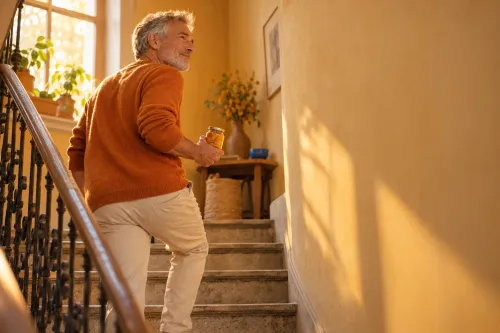
- Load-related pain: stairs, walking downhill or standing for long periods make it worse.
- Stiffness: the knee feels stiff, especially in the morning (see morning stiffness).
- Cracking and grinding as well as limited bending or straightening.
The diagnosis is made by a doctor, usually from a conversation, a physical examination and an X-ray. Note that X-ray findings and felt pain do not always match: some people show clear changes on the image and have few complaints, and for others it is the other way round.
Selected curcumin studies in knee osteoarthritis
The details come from our blog article on the topic. The studies are small to medium-sized and short; they do not show a cure.
| Study | Participants | Duration | Investigated |
|---|---|---|---|
| Study Panahi 2014 | Participants 40 | Duration 6 weeks | Investigated Pain and function (WOMAC), curcuminoids together with piperine |
| Study Kuptniratsaikul 2014 | Participants 367 | Duration 4 weeks | Investigated Curcuma domestica extract compared with ibuprofen |
| Study Nakagawa 2014 | Participants 50 | Duration 8 weeks | Investigated Knee pain (VAS) and knee function (JKOM) with a highly bioavailable curcumin (180 mg/day), placebo-controlled |
Knee osteoarthritis and curcumin: what do studies say?
The knee is the joint where curcumin has been studied most often in osteoarthritis. In controlled trials with people with knee osteoarthritis, pain, stiffness and function were mostly recorded with the WOMAC index. In several of these studies the curcumin-extract groups scored better on these questionnaires than the comparison groups; in one study with 367 participants the result was similar to ibuprofen, with fewer stomach complaints.
That does not mean curcumin treats knee osteoarthritis or rebuilds cartilage. The studies are partly short (4 to 8 weeks), the numbers of participants are modest, extracts and doses differ widely, and osteoarthritis pain scores also respond noticeably to a placebo. How robust the results are overall remains a matter of research.
Knee pain can have many causes. Have it assessed by a doctor before you try supplements. This text is not medical advice. If you take medication (especially anticoagulants), discuss supplements with your doctor first.
Frequently asked questions about knee osteoarthritis
Is knee osteoarthritis curable? According to current knowledge, lost cartilage does not reliably grow back. Complaints can often be influenced, though, for example through exercise, weight loss, physiotherapy and medically supervised treatment.
What helps in everyday life? Joint-friendly exercise such as cycling or swimming and muscle building around the knee are considered well supported. Your doctor decides which measures suit you.
How quickly do studies show effects? In the curcumin studies mentioned, outcomes were measured after 4 to 8 weeks. Curcumin is not an acute painkiller, and the results of single studies cannot be transferred to every person.