What are antioxidants?
Antioxidants are molecules that neutralise free radicals and other reactive oxygen species before they can oxidise fats, proteins or DNA. Your body makes its own protective systems and takes up further antioxidants from plant foods.
Antioxidants explained simply
Every metabolic process that uses oxygen produces reactive oxygen species. These include free radicals: highly reactive molecules with an unpaired electron. In small amounts they even serve useful purposes, for example in immune defence. When they predominate, this is called oxidative stress.
Antioxidants act as a buffer: they donate an electron or otherwise intercept the radical and end the chain reaction. The popular comparison to rust on a car captures the principle, even though the biochemistry is far more intricate.
Where do antioxidants come from?
There are two main groups:
- The body's own systems: enzymes such as superoxide dismutase, catalase and glutathione peroxidase, plus the tripeptide glutathione.
- From food: vitamins C and E, carotenoids and many polyphenols from fruit, vegetables, tea and spices.
The fact that the body's own defences can weaken with age is one reason the topic receives so much research attention.
Examples of antioxidants
A selection of well-known substances and their origin.
| Antioxidant | Typical source | Type |
|---|---|---|
| Antioxidant Vitamin C | Typical source Peppers, citrus fruit | Type water-soluble, dietary |
| Antioxidant Vitamin E | Typical source Plant oils, nuts | Type fat-soluble, dietary |
| Antioxidant Glutathione | Typical source made by the body | Type endogenous |
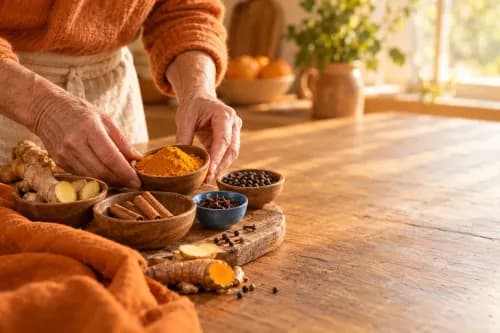
| Antioxidant Curcuminoids | Typical source Turmeric root | Type plant polyphenols |
Antioxidants and curcumin
Curcuminoids are polyphenols and show antioxidant activity in the lab: they can scavenge free radicals directly.
Context matters: results from test tubes and cell cultures cannot be transferred to humans unfiltered. Whether and how strongly curcumin acts as an antioxidant in the body also depends on how much of it reaches the bloodstream, a question of bioavailability. There is no authorised health claim for curcumin and oxidative stress.
Frequently asked questions about antioxidants
Do I need antioxidant supplements? For most people a varied diet with plenty of vegetables, fruit, herbs and spices is enough. Large trials with high-dose single compounds such as vitamin E or beta-carotene showed no clear advantage and, in smokers, partly even disadvantages.
Are "radical scavengers" and antioxidants the same thing? Yes, the terms are mostly used interchangeably. Both mean substances that neutralise reactive molecules.
Is oxidative stress always bad? No. A certain amount of reactive oxygen species is part of normal signalling, for example during exercise. A lasting imbalance is what becomes problematic. This is also why it is hard to infer a benefit from lab values alone, and statements about curcumin should always be read with the human evidence in mind.
"More is better" does not apply to antioxidants. High doses of single isolated antioxidants have shown no clear benefit in large trials. A varied, plant-rich diet is the foundation; supplements do not replace it. This is not medical advice.